
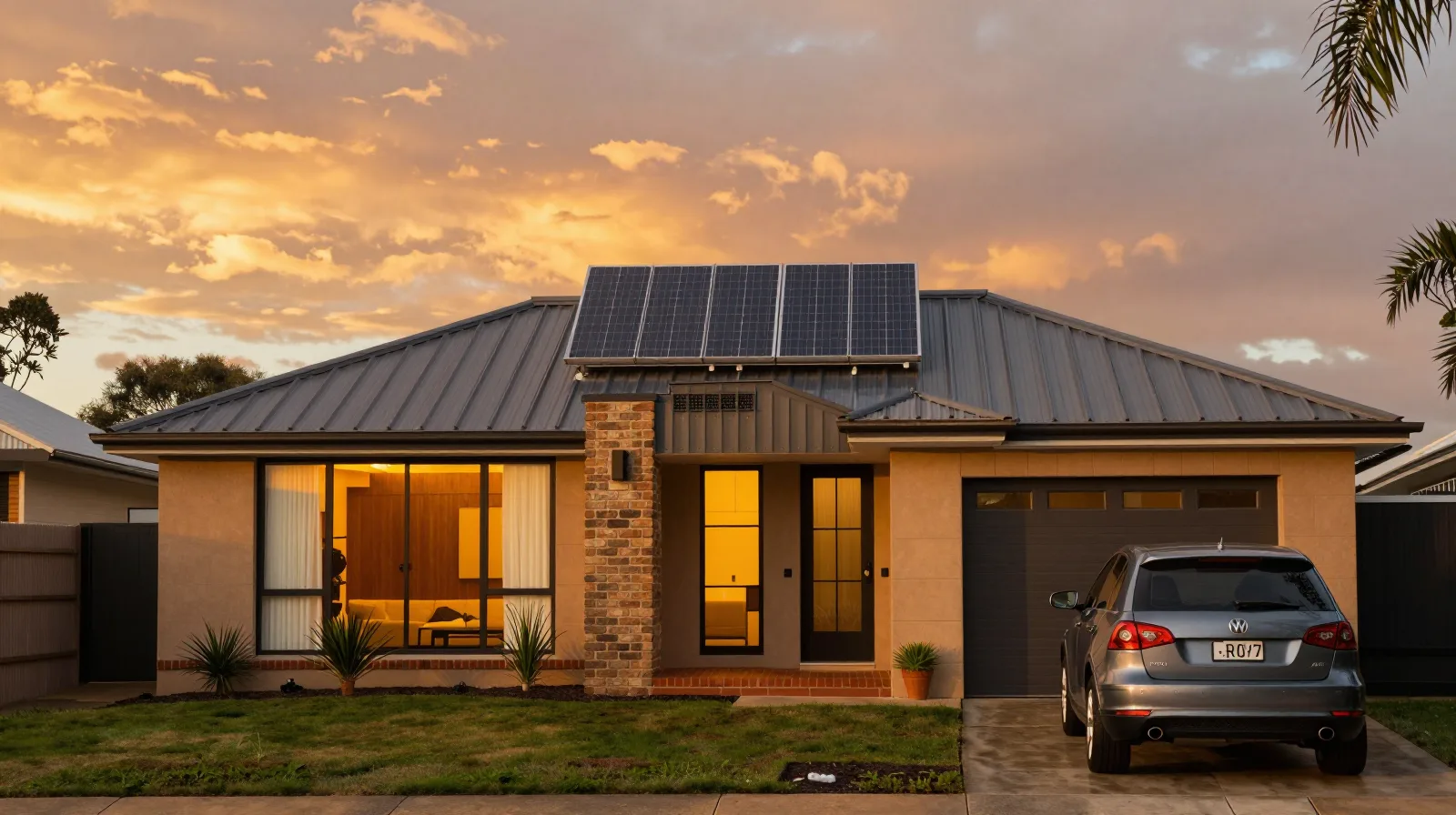
Solar saves you money in a simple way: every unit of electricity your panels make and you use is a unit you did not have to buy from the grid. The size of that saving comes down to how big your system is, how much power you use, when you use it, and the tariff you are on. This guide walks through each of those, then puts real numbers on a typical home.
The two ways solar puts money back in your pocket
There are only two of them, and telling them apart is the single most useful thing to understand before you buy.
Self-consumption: the big one
When your panels are generating and you are running the fridge, the aircon, the pool pump or the oven at the same time, that power is essentially free. You avoid buying it at the retail rate, which across most of Australia sits somewhere around 25 to 40 cents per kilowatt-hour. Every kilowatt-hour you self-consume is worth that full retail rate to you.
Feed-in: the smaller one
Whatever your panels make that you do not use is exported to the grid, and your retailer pays you a feed-in tariff for it. Feed-in rates have fallen a long way and now typically sit in the single-digit cents per kilowatt-hour. So exported power is worth far less than power you use yourself.
The lesson: a kilowatt-hour you use is worth several times more than one you export. Savings come mostly from self-consumption, not from selling power back.
What actually drives your savings
Three levers move the number more than anything else.
- System size. A bigger system generates more, but only pays off if you can use or store the extra. On most homes a 6.6kW to 10kW system is the sweet spot; oversizing purely to export rarely stacks up at today's feed-in rates.
- Your usage pattern. A home with someone in during the day, or with a pool pump, EV charger or electric hot water you can shift to daylight hours, self-consumes far more and saves more. An empty house from 9 to 5 exports more and saves less, until you add a battery.
- Your tariff. The higher your usage rate, the more each self-consumed unit is worth. Time-of-use tariffs, where evening power is dearest, make a battery more valuable because you can dodge the peak.
Roof orientation and shading matter too. North-facing panels produce the most over a day, while a west-facing string can push more output into the late afternoon when many homes actually use power. A good design balances the two around your habits.
A worked example for a typical home
Take a household on a fairly average bill, with a 6.6kW system. The figures below are indicative and rounded, meant to show how the pieces fit rather than to promise a result. Your written quote is where exact numbers live.
Indicative: 6.6kW system on an average home
- System generation: around 9,000 to 10,000 kWh a year in much of Australia
- Self-consumed (about 40% of output): roughly 3,800 kWh at ~30c = about $1,140 avoided
- Exported (the rest): roughly 5,700 kWh at ~5c feed-in = about $285 earned
- Indicative yearly benefit: on the order of $1,200 to $1,500
Indicative only. Actual output depends on your location, roof, shading and tariff; self-consumption depends on your habits. We confirm real figures in your quote.
Two things stand out. First, the avoided-purchase saving dwarfs the feed-in earnings, which is the self-consumption point again. Second, you can lift the whole number by shifting more usage into daylight, adding a battery to catch the exports, or sizing the system to your real consumption rather than a round figure.
So what about payback?
Payback is simply how long the yearly savings take to cover the upfront cost after rebates. For a well-sized home system claiming the federal STC discount, payback typically lands in the four to seven year range. After that, the system keeps generating for many more years, and quality panels carry a 25-year performance warranty, so the savings continue well past break-even.
A few things push payback shorter or longer:
- Higher electricity prices shorten payback, because every self-consumed unit is worth more.
- More daytime self-consumption shortens it, which is why habits and sizing matter as much as the hardware.
- Adding a battery increases the upfront cost and can lengthen simple payback, though the federal battery rebate and time-of-use savings narrow the gap, and you gain backup and independence that a payback figure does not capture.
How to find your own number
Averages only get you so far. Your bill, your roof and your daily routine set your actual result, so the honest next step is to run your own figures rather than trust a rule of thumb.
- Use our savings calculator to get an indicative system size, cost after rebates, and yearly saving based on your details.
- Read the rebates guide so you know exactly which incentives come off your price.
- Get a free quote for exact, site-specific numbers with no obligation.